Differentiating Yourself Through Quality Design
Words: Joe Raboine
Words and Photos: Joe Raboine, Director of Residential Hardscapes, Belgard
Whether you consider yourself a designer or not, the bulk of our work in the outdoor living industry focuses on the design and how it translates to our clients. We utilize our expertise, as well as the input and tastes of the client, to create spaces that are welcoming, functional, lasting and beautiful.
Designing with intention is critical as the industry continues evolving. Research shows that design focused on fostering health and well-being has positive impacts on people inhabiting the space, as well as the surrounding community. According to The American Institute of Architects (AIA), “Good design supports health and well-being for all people, considering the physical, mental and emotional effects.”
To stand out in a highly in-demand and somewhat crowded industry, focus on quality hardscape design that meets client expectations and fosters a deeper connection with their natural surroundings. This will help you differentiate yourself from the competition.
Tips to Maximize Quality Design
Even as schedules fill up quickly, taking time to plan a thoughtful, creative design pays off in the long run. Here are key tips for implementing quality design practices in your business.
1. Improve Efficiencies to Maximize Time
Equipment innovation is changing the industry for the better. New tools and methods, like mechanical installation, reduce hardscape installation times and decrease demand on crews – meaning you can get more done in less time and tackle larger, more intricate projects. Specialized equipment also adds another level of professionalism, allowing you to charge more for skilled and efficient work while focusing more on creating the most impactful design. By implementing updated tools and practices in your business, you can achieve quality design faster and easier – while meeting the high expectations of your clients.
2. Lean Into Technology
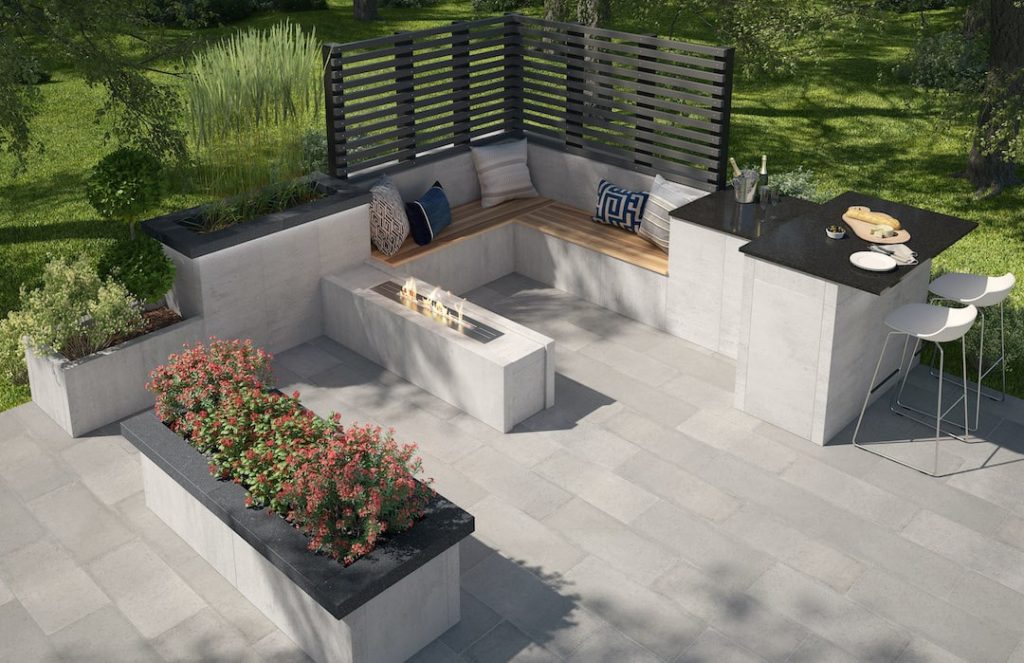
We’ve come a long way from sketching our design on notepads (or napkins or whatever material was handy at the moment). Today, software programs can help us render incredible designs and show clients exactly what their space will look like. Augmented Reality (AR) and 3D design solutions create life-like renders, allowing clients to virtually step into their new backyard. You can start from scratch or use templated designs that can be customized to meet the client’s specific goals. These technologies eliminate miscommunications during the design phase and help you avoid changes mid-construction, overall making it easier to both sell the idea and build the space.
3. Make Functionality a Priority
An outdoor living room, kitchen, or patio no longer serves a single purpose. Rather than being spaces solely for special occasions or entertaining, they are now part of everyday life. Maximizing functionality should be a priority when designing an outdoor living area for any client. Outside of just the hardscape elements, think through features like lighting and sound capabilities and electrical and Wi-Fi access upfront so they can be installed – or phased out – more efficiently. So these spaces can be used year-round. Also, discuss heating and cooling features with your client. Installation is more difficult if these items are not included in the initial design concepts.
4. Incorporate Biophilic Design
Biophilic or entangled design combines natural elements with hardscape design, enhancing continuity and fostering health and wellbeing. As you discuss your client’s vision for their outdoor space, make a note of areas that could benefit from blending the landscape and hardscape. You can achieve beautiful entangled designs by utilizing fractured and irregular edges, natural stone transitions, and blending boulders, grass, and aggregate to create an organic look. Even if you aren’t tackling a particular project’s landscaping, you can add suggested greenery and plant life in renderings to showcase how biophilia will enhance the design.
Designing With Intention
Quality design doesn’t have to come with too many added costs for your business. Designing with intention starts with listening to your client, then using your knowledge and expertise to create a space that will exceed their expectations. There is some investment required for the right tools and technologies, but these will help maximize both your client relationships and profits moving forward.