Maintaining Your Investment
Words: Bronzella Cleveland
Words and Photos by Dean Marsico
One of the most exciting times for a homeowner is when they start a project that they have been saving and planning for over the course of months or even years. Unfortunately, COVID-19 has devastated certain sectors of our economy that may never come back. At the same time, outdoor living design and installation are experiencing a big boom. If you talk to any contractor or landscape designer around here in the Boston area or other parts of the country, chances are they will tell you it is quite the challenge trying to keep up with all the work they are booking. Don’t believe me? Try reaching out to a pool company about getting an installation. Pool companies in my area are telling new customers they are at least two years out. For those of us in the masonry and hardscape business things have gotten a little crazy between people wanting jobs done right away and product supply issues because of lockdowns.
When a contractor starts to break ground hopefully the customers have spent time educating themselves about things like budget, product choices, plantings, and furniture. Choosing the right design that fits their home and lifestyle is very important. Once the work is completed, and everything looks new and clean, chances are the homeowner hasn’t put much thought into how to maintain the space and keep it looking like new over the years to come. This is a concern that will arise sooner or later no matter what part of the country you live in. Whether you live in an area that gets extremely cold, hot, or a climate in between, we know over time seasonal changes can age or even damage outdoor living spaces in a relatively short period of time.
Keeping up on the basics like weeding, lawn care, watering the plants, are some of the obvious things that should be done. One of the best investments homeowners can make is a pressure washer. You will never regret buying a pressure washer because they have so many uses around the home. Don’t buy the most expensive or most powerful machine if you are not a professional. IT will be a waste of money. What you do need is an understanding of how it works. Taking your time to educate yourself on how to use it correctly will save you a lot of headaches. As we know the most important rule is to never start the engine without having it connected to water with the valve open. If you run it without water you will be buying a new one. Believe it or not, this is a very common mistake people make.
Pressure washers can also do a lot of damage when you use the wrong tip or have the wand too close to the surface you are trying to clean. One of the focal points of your living space is the patio. Whether it is built with natural stone, concrete pavers, or decking materials, as it ages it can get staining or fade from things like the sun, fallen leaves, lots of shade, and excess moisture. A pressure washer will be a simple fix for most of these issues. For most patio cleaning jobs you want to fan the water over the surface. Always start with the higher degree tip and then work your way down until you find the right one for the job. It is highly unlikely you will need a zero-degree tip because it’s too much-concentrated power. Be very careful when you are cleaning a stone patio because you can easily remove the finish of the stone when cleaning with the wrong tip.
There are some stains that a pressure washer alone won’t help with. Efflorescence staining is a strong possibility if your patio was wet set in regular mortar. Efflorescence in technical terms are soluble salts and other water dispensable materials that rise to the surface. In simpler terms, it means your patio has white stains both in the joints and on the surface of the brick or stone. If you are like me and do a lot of cooking in your outdoor living area there are no avoiding stains like grease, oil, and spilled beverages. Rust bleeding onto the patio from metal furniture can also be an issue. For these problems, you will need a cleaner. Take note. All cleaners are not the same. Educate yourself. Some have very strong chemicals like acid that can damage plants, irritate your skin, or even worse damage your eyes and lungs. Follow directions and wear the proper safety gear like gloves, masks, and glasses.
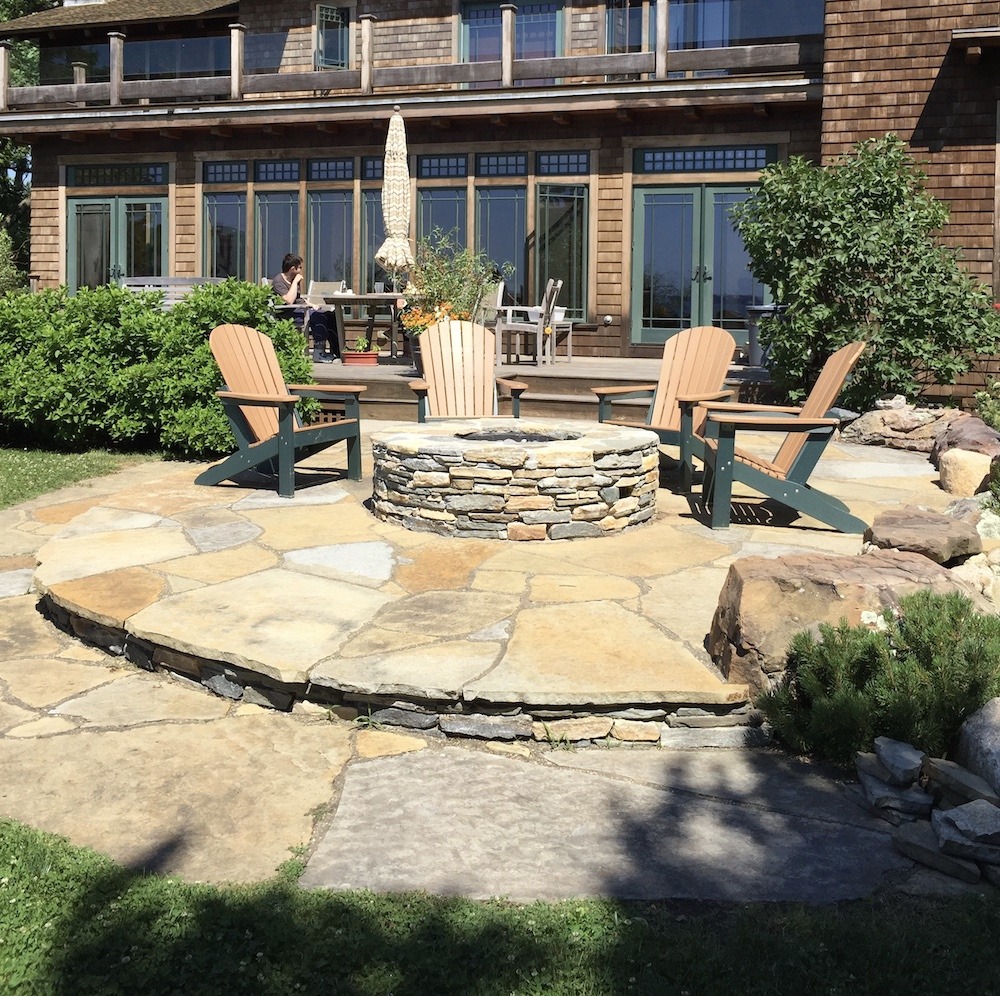
If you have an outdoor countertop in your living area it’s always a good idea to use a sealer that you will want to apply every few years. Make sure to purchase one that is food safe. I’m not a big fan of sealing stone patios. The concern is when you apply a sealer to a stone patio you can seal in moisture which will cause major problems down the road. When water can’t evaporate or escape it will do damage. Pavers on the other hand are a great product to use a sealer on. Sealers are broken up into different categories such as no gloss, low gloss, and high gloss. Some will even help enhance the color of an older-aged patio to give it more life. Look for a sealer that penetrates your pavers and avoid the products that just sit on the surface. Here’s an important tip, do a test on a few extra pavers and let them dry so you can see how they look before you cover the entire area. Never seal wet cast pavers. Wet cast pavers have a rich stone-like gloss texture and won’t absorb the sealer. They will dry with a cloudy haze on the surface.
Another thing to look out for the maintenance of the polymeric sand between the joints. If you are getting weed growth on the patio it’s time to reapply. When applying polymeric sand it is very important to do it on a dry surface. Make sure there is no rain in the forecast and don’t leave any sand on the top of the pavers before activating with water. Taking your time and paying attention to detail is a must when using sealers and polymeric sand. I like Alliance Gator products. Excellent quality, great customer service and they have a very extensive product line including polymeric sand, cleaners for grease, oil, and efflorescence.
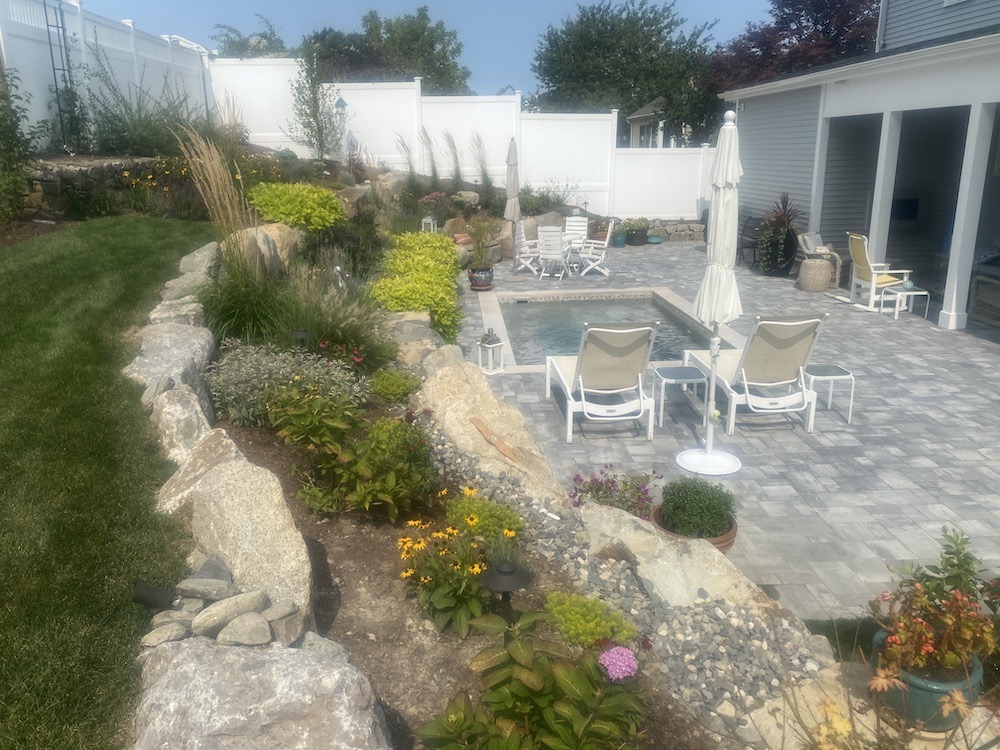
One of the most common issues with wet set patios is the degradation of the joints. If your patio has been set over concrete with regular mortar, over time you might see some cracking and lifting of the mortar joints. If it's just a few joints you can repoint with mortar, just know that the color won’t match the rest of the joints. How do you repair a large area of cracked broken joints on your patio? The first step is to use your pressure washer to clean the stone or brick to remove the broken joints. You might have to get on your hands and knees to dig out the old mortar completely. You probably will have to reset a few bricks or stones that have become loose.
For this job educate yourself about engineered cement. I highly recommend the Ardex Americas products. I have been using them for many years and they are exceptional. When resetting patio pieces make sure the surface is completely dry, chisel out the old mortar underneath, and set with Ardex 32. It is an excellent product for wet setting stone, tile, pool coping and works great on uneven surfaces. For repointing, the new outdoor grouts are very reliable and have many color choices. They should help alleviate cracking and lifting compared to type N or S mortar. If you have an older concrete poured patio they also have some great overlays that will fill cracks and help bring the surface back to life.
My main focus has been on the hardscape products of your living area but there are other things you can do. If you have metal furniture make sure you repaint wherever needed before they rust and stain the patio. If your metal grill is starting to age there are some high heat spray paints that will help bring them back to life. Simple things like storing your furniture inside or covering it over the winter can go a long way. Not a big investment and can go a long way keeping it looking new.
It doesn’t matter how large or small your outdoor living area is. As the years pass it will need a little attention. When you deal with the small problems as they occur they won’t become larger and very expensive problems down the road. A beautiful outdoor living space can create lasting memories throughout the years if it has been installed and maintained the right way.